Diseño y Desarrollo: MNDRN
Circular Economy
As we develop our lines of business, we utilize the by-products generated
in each production process, advancing our circular economy practices
Circular Model
Based on Sugarcane
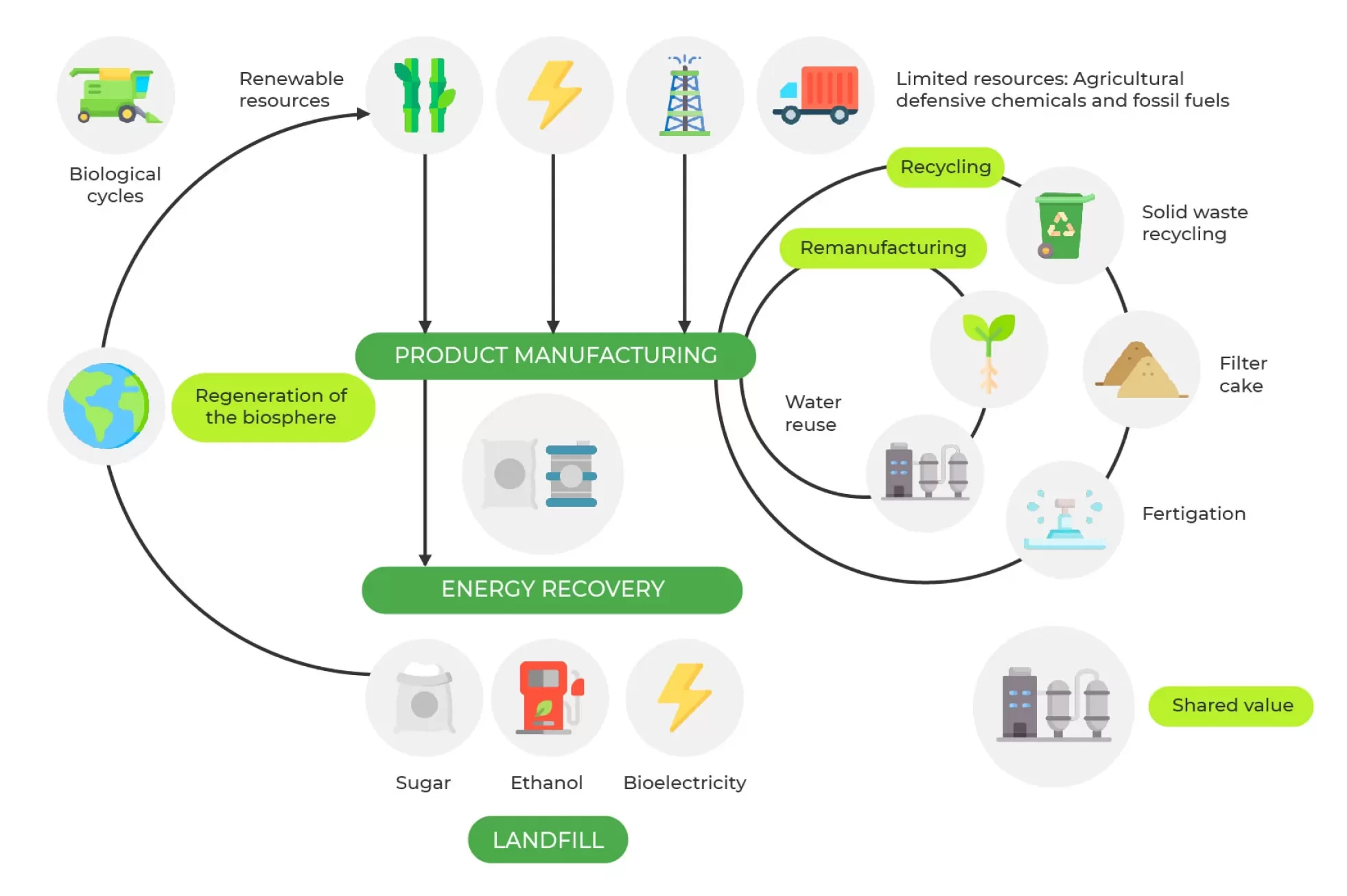
In addition to processing sugarcane to obtain sugar and ethanol, we also generate biomass from the fibrous residue of sugarcane, which we call bagasse. We use this by-product to cogenerate steam and electricity. Most of the energy generated is consumed at our facilities, and the rest is sold to the national electricity distribution system. The electricity we supply to the state grid is enough to meet the demand of over 1,100,000 people in Mato Grosso do Sul!
We also use other by-products from our industrial process to produce biofertilizers that are returned to our fields. The ashes from the boilers together with the filter cake undergo a composting process and are used as organic fertilizer in the sugarcane growing areas. In our Angelica (MS) and Ivinhema (MS) plants, the vinasse generated during sugarcane processing goes through an industrial concentration process and is converted into liquid organic fertilizer. This process is registered and recognized by the Ministry of Agriculture, Livestock and Supply. It is applied as biofertilizer on cane crops, while another part of the vinasse generated is used in the manufacture of biogas and biomethane.
All waste from our sugarcane processing is reused
A large part of our sugarcane fields receives liquid biofertilizers, ensuring the correct and safe use of the vinasse concentrated in the process. In total, we produce around 70 million liters of liquid biofertilizer monthly.
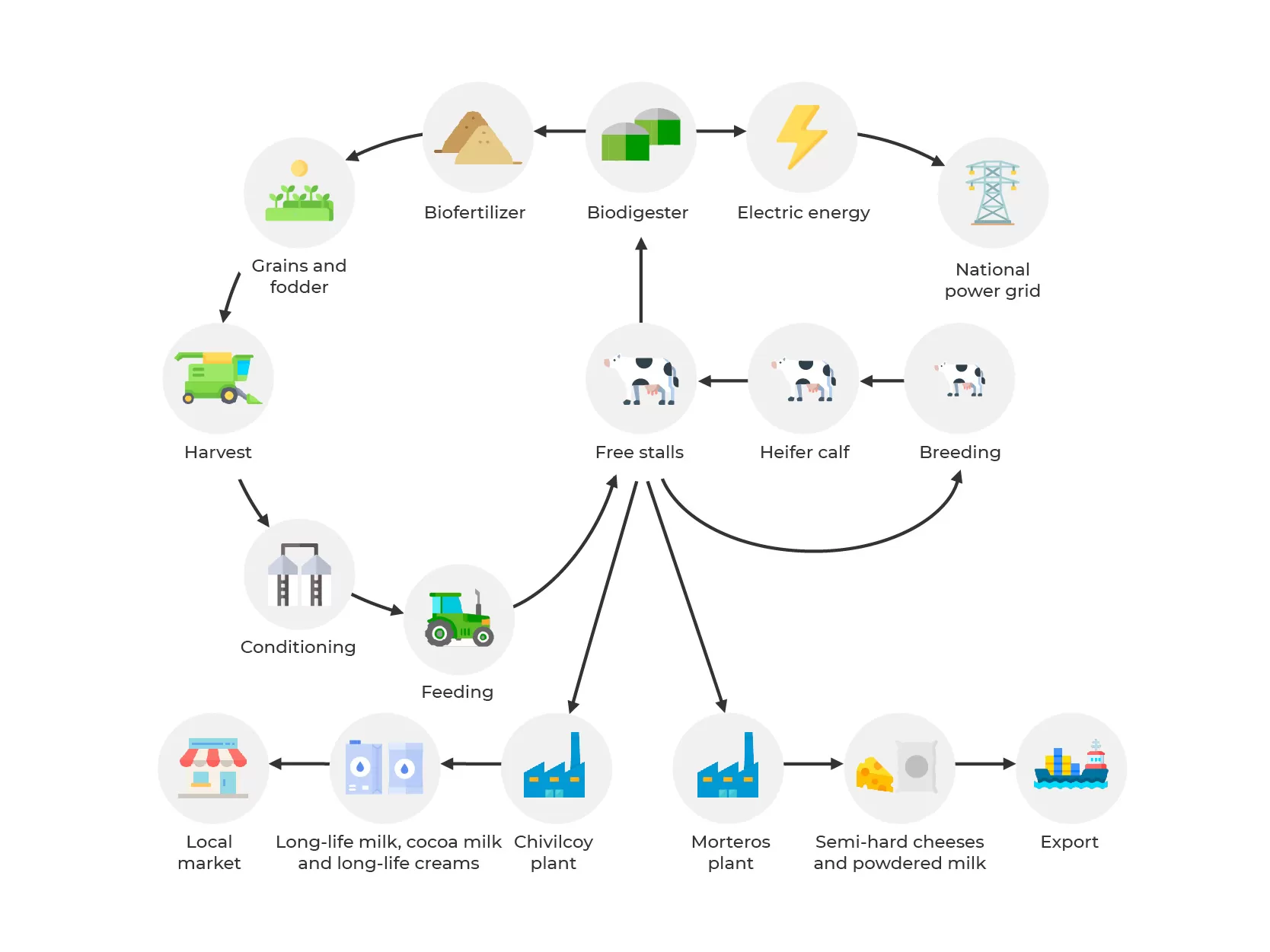
Dairy Circular Model
At our freestalls, we develop a production model where 100% of cow manure is used to generate electricity with biodigesters. Our first biogas plant began operating at the end of 2017, while our second one was inaugurated in 2023. Our two biodigester-based plants have a combined installed capacity of 3.4 MW and the potential to generate approximately 25,000 MWh of electricity annually.
At the same time, the waste from this process returns to the fields as biofertilizer with a lower organic load, to fertilize the crops and fodder that will be fed to the cows.. To date, we have processed more than 500,000 tons of cow manure and generated over 70,000 MWh of renewable energy. With these processes, we have managed to reduce the use of chemical fertilizers, to increase soil carbon, to reduce greenhouse gas emissions and to reduce odor.